Moody JB, Renaud JM, Poitrasson‑Rivière A, Hagio T, Alahdab F, Al‑Mallah MH, Vanderver MD, Ficaro EP, Murthy VL. Identification of impaired microvascular/vasomotor function with deep learning analysis of stress‑rest ECG. Journal of the American College of Cardiology. 2024;83(13):2444. Poster presentation.
Description:
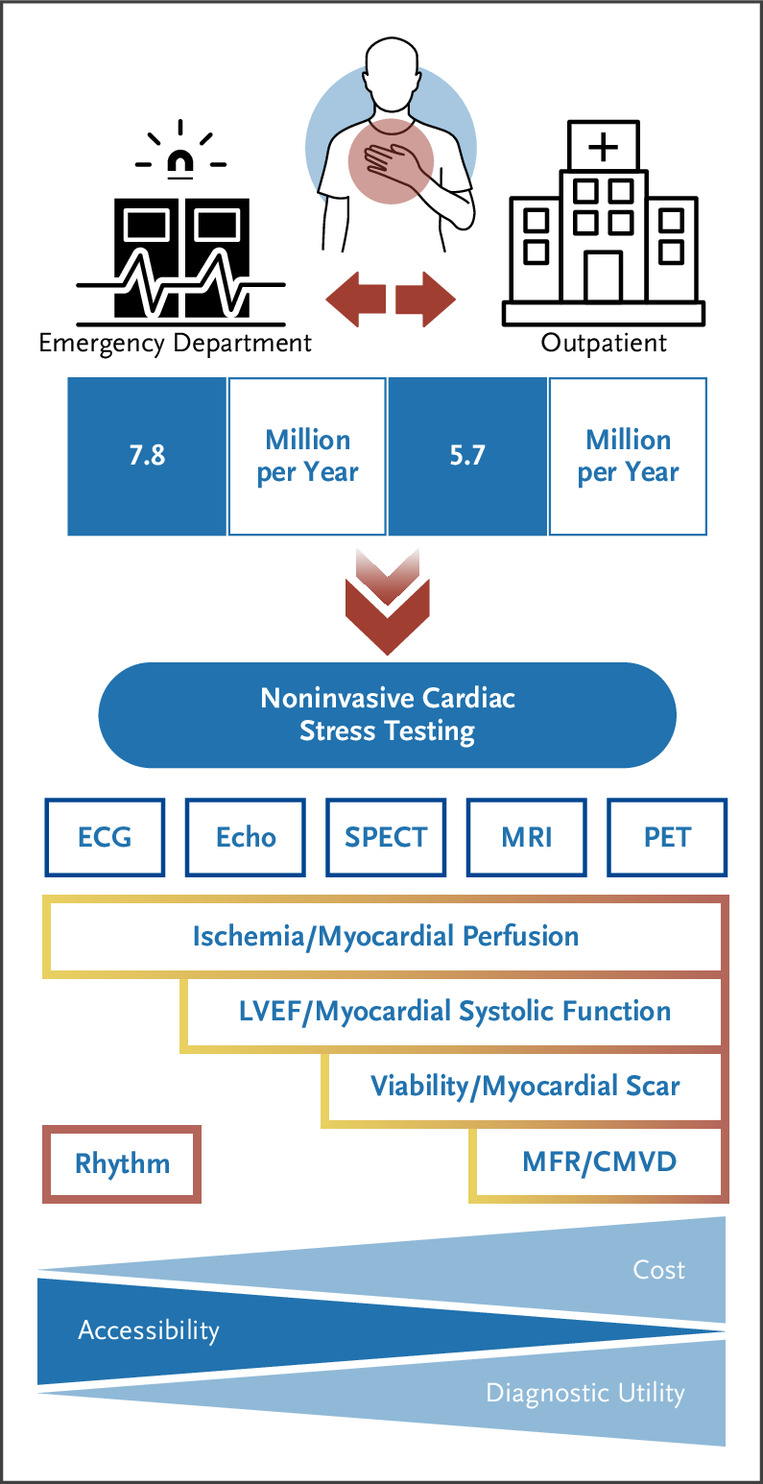
This poster, presented as part of the JACC 2024 meeting and published as an abstract, introduces a deep-learning model—referred to as ECGFlow—trained on paired rest and stress ECG data to identify impaired myocardial flow reserve (MFR), a marker of coronary microvascular and vasomotor dysfunction. The approach addresses the challenge that impaired MFR and microvascular dysfunction are difficult to detect using standard clinical testing.
The model was developed using a transformer-based deep-learning architecture, trained via a self-supervised learning framework on large ECG waveform datasets, and fine‑tuned with labels derived from PET‑MPI–based quantitative MFR data. Performance was evaluated in hold‑out cohorts.
Key Findings:
- Diagnostic Performance: EEGFlow showed improved diagnostic accuracy for impaired MFR compared to models trained from scratch, with AUROC around 0.758, sensitivity ~70%, and specificity ~69%
- Prognostic Value: Abnormal outputs were associated with significantly elevated mortality risk across PET and stress SPECT cohorts (hazard ratios 2.3 to 3.8)
Clinical Relevance:
This early-stage model highlights the potential of AI-enhanced ECG analysis to noninvasively detect microvascular dysfunction—typically requiring expensive PET measurements—using widely available stress and rest ECGs. If validated in larger cohorts, such a tool could broaden access to advanced cardiovascular phenotyping in routine care settings.