Poitrasson-Rivière, A., Moody, J.B., Renaud, J.M. et al. Impact of residual subtraction on myocardial blood flow and reserve estimates from rapid dynamic PET protocols. J. Nucl. Cardiol. 29, 2262–2270 (2022).
Description:
This study evaluated the impact of residual activity subtraction on myocardial blood flow (MBF) and myocardial flow reserve (MFR) measurements in PET imaging using tracers 13N-ammonia and 18F-flurpiridaz.
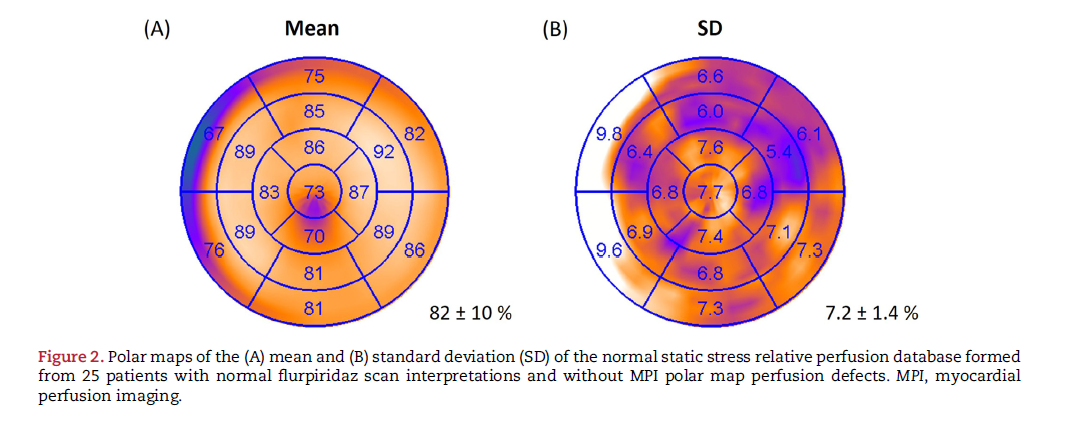
The analysis included data from 63 patients with 13N-ammonia and 231 patients from the flurpiridaz 301 trial. The results showed that without sufficient delay between rest and stress injections, residual activity significantly overestimated MBF values, more so for flurpiridaz. Residual subtraction increased the diagnostic accuracy of PET imaging compared to (QCA).
Clinical Relevance:
Correctly accounting for residual activity is crucial for accurate assessment of MBF and MFR, especially in PET imaging protocols with shorter interscan delays. Implementing residual subtraction can significantly improve the diagnostic accuracy of PET imaging in detecting coronary artery disease, leading to better-informed clinical decisions. This methodology enhances the clinical throughput while maintaining the accuracy of diagnostics, making same-day rest-stress imaging viable even with longer-lived radiotracers.
Partners in Research:
INVIA Medical Imaging Solutions, the University of Michigan, GE Healthcare, and Northwestern University collaborated on this research.